
There’s a reason slabs crack in Texas—and it’s not the concrete.
Most builders are still fighting movement after the fact.
Post-tension cables. Deeper beams. More steel.
All of that is designed to hold a slab together while the ground underneath it is still moving.
That’s the problem.
The Reality in the Field
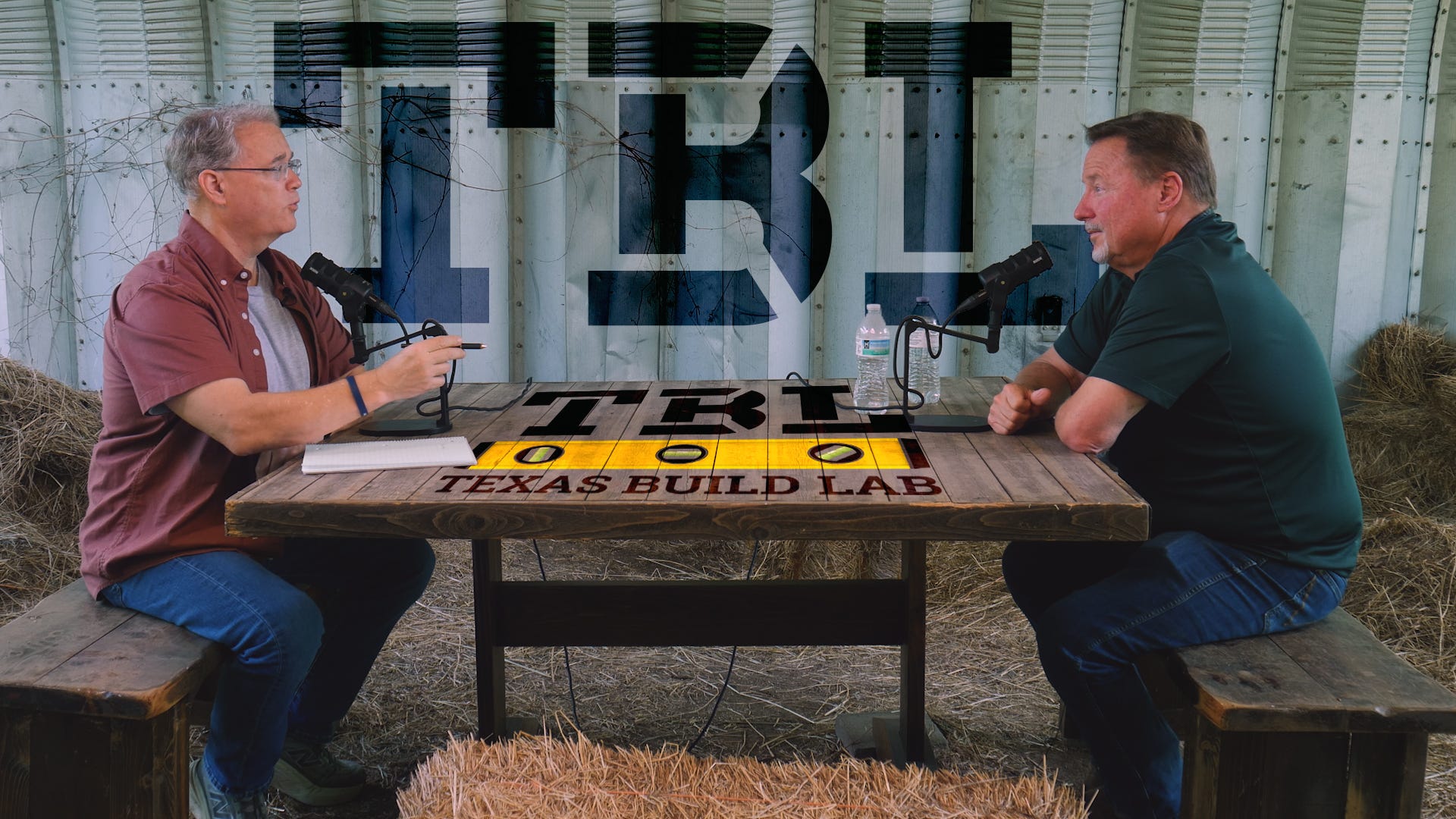
On this episode of Texas Build Lab, we sat down with a lumber supplier who’s spent over a decade working directly with builders across New Mexico and Texas.
Different markets. Same issue.
Expansive clay.
In places like Roswell, foundations were failing across entire neighborhoods. The response?
Over-excavate
Bring in select fill
Compact in lifts
Add cost
Hope it holds
It didn’t solve the root issue—it just slowed it down.
Watch the full episode here:
Texas Is the Same Problem—Scaled Up
From North Texas down through Austin and into Houston, you’re sitting on high-plasticity clay.
When it gets wet, it expands.
When it dries out, it shrinks.
That cycle doesn’t stop.
So what does the industry do?
They engineer the slab to survive movement:
Post-tension cables
Reinforced beam
s
Structural overdesign
That’s not stabilization. That’s containment.
If you want the full breakdown of our talk with Freeman on how soil stabilization reduces PVR and stops slab movement, read it here:
👉 Full Breakdown on StabilTech Soil
What Post-Tension Actually Does
Post-tension slabs use cables inside the concrete that are tensioned after the pour.
They compress the slab to keep it together as the soil moves.
It works—to a point.
But it doesn’t stop:
Soil heave
Differential movement
Long-term stress on the structure
It just keeps the slab from coming apart while it’s happening.
The Missed Step: Fix the Soil First
Clay moves because of its electrical charge.
Water bonds to clay particles, causing them to stack and expand.
If you remove that charge, the reaction stops.
That’s the shift.
Instead of designing around movement, you eliminate the cause:
Neutralize the clay
Stop platelet stacking
Reduce PVR (Potential Vertical Rise)
Lock the soil in place
Once that happens, the slab isn’t fighting the ground anymore.
What This Looks Like in Practice
On active jobs, the process is straightforward:
Pre-wet the soil to full saturation
Inject STX90 solution at depth (6–15 ft depending on geotech)
Adjust mix ratios based on soil report
Achieve full 360° saturation at each interval
The goal is simple:
Stop the swell-shrink cycle before the foundation is ever poured.
Why This Matters for Builders
Every builder has heard it:
“You’re in Texas. If you don’t want cracks, don’t pour concrete.”
That mindset exists because the industry accepted movement as unavoidable.
It’s not.
If the soil doesn’t move, the structure doesn’t fight.
Bottom Line
Post-tension manages movement
Select fill delays it
Piers bypass it
Soil stabilization eliminates it.
If you’re building in Texas and not addressing PVR at the soil level, you’re still gambling.
For project-specific guidance and soil evaluation details:
👉 https://stabiltechsoil.com