
When a builder is working a townhome community, the pressure to move fast is real. Slab schedule is set. Trades are lined up. Every delay costs money.
But here's what some builders skip, and pay for later.
The geo tech report on this East Texas site came back at 4 to 6 inches PVR. That’s Potential Vertical Rise — the distance the soil underneath a foundation is capable of moving upward. Without treatment, the ground under these townhomes had enough swell potential to push up 4 to 6 inches.
That’s not a crack. That’s a structural failure.
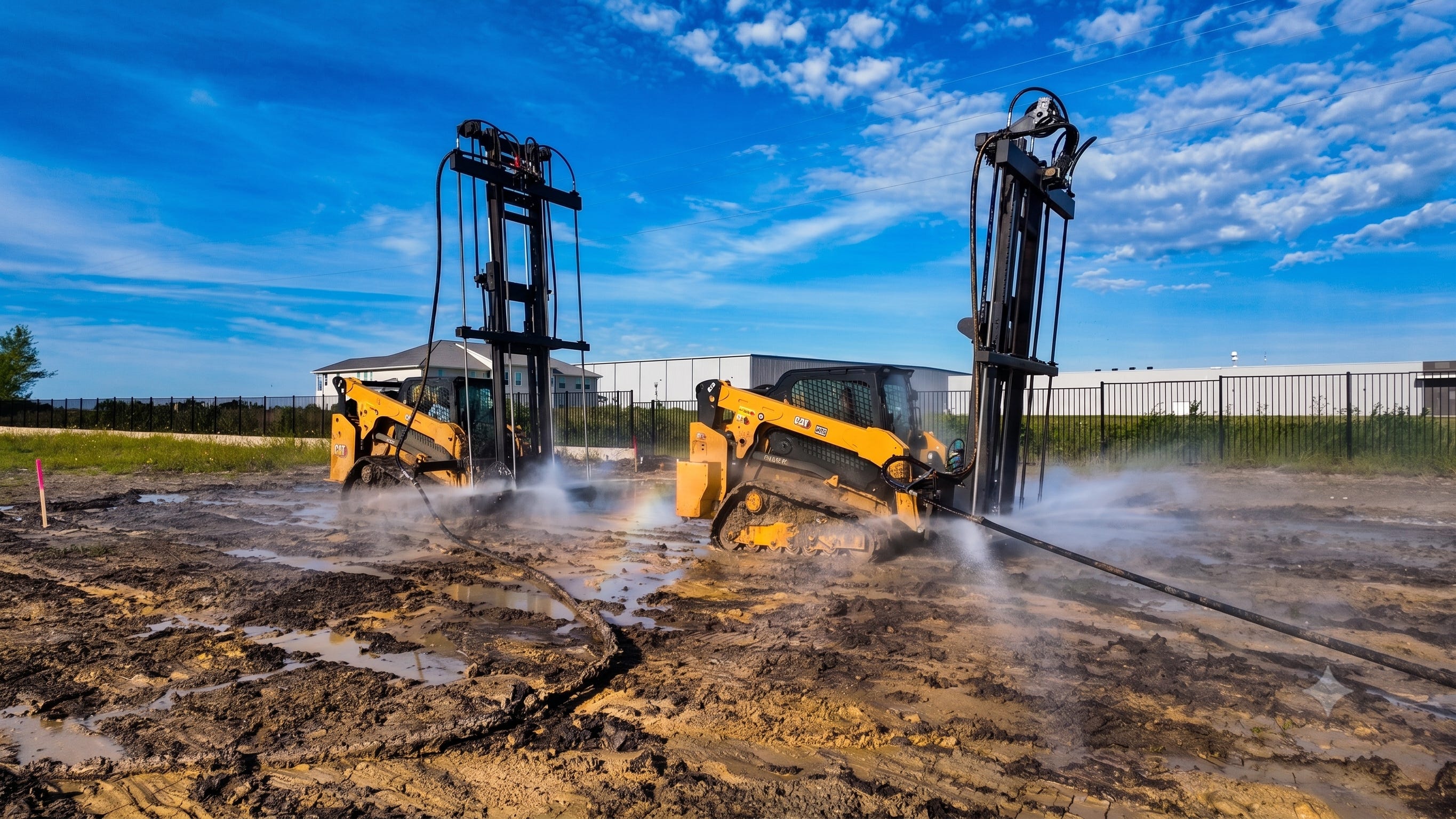
We were on-site before the slabs went down. That’s the only way this works.
Two machines running simultaneously, covering roughly 200,000 square feet in Greenville, TX. Two-foot injection drops, 24 to 28 inches at a time, pushing water and STX90 solution into the soil across the entire pad.
The goal: get the PVR down to 1% or less before concrete ever touches the ground.
Here’s the chemistry that makes it permanent.
Expansive clay particles carry a negative charge. That charge is what pulls water in and causes the swelling that wrecks foundations. STX90 changes that charge at the molecular level. Once treated, the clay can’t bond to water the same way. Water moves through — it just doesn’t stick. That change doesn’t wear off.
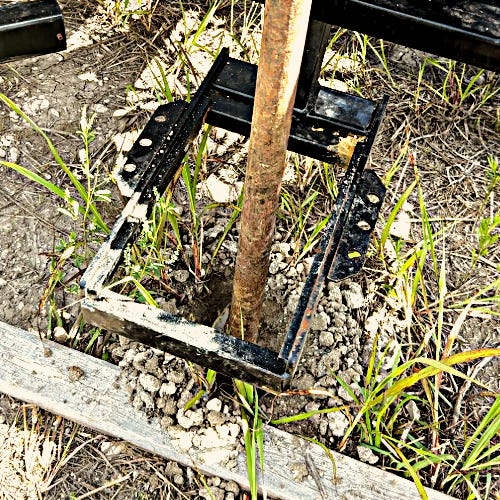
After injection, independent testing verifies the result. A third-party crew pulls 2 to 3 dozen samples from random spots across the pad — locations StabilTech doesn’t choose. Those samples go back to the lab. The target is 1% PVR. On this soil type, in this area, that result is consistently achievable
.
The builder used the geo tech report to design the foundation. That’s the right move. But a geo tech report describes the problem. STX90 injection solves it. If you’re designing on top of untreated expansive clay, you’re building on a problem that’s still there.
On a project this size — roughly 200,000 square feet — the full treatment runs 4 to 6 weeks. We were already a week in when this video was shot, with about 35,000 square feet complete.
Watch the full field report here:
🎥 Watch: Stabilizing 200,000 Sq Ft of Expansive Clay Before the Slabs Went Down — Greenville, TX
And if you want the full breakdown — soil chemistry, testing process, injection methodology, and why PVR matters more than most builders realize — the complete field report is on the site:
📄 Read the Full Field Report →
If you’re planning a pour on expansive clay and haven’t had the soil tested — or tested but not treated — that’s the conversation to have before the concrete truck shows up.
— StabilTech
(469) 908-1989 | stabiltechsoil.com