
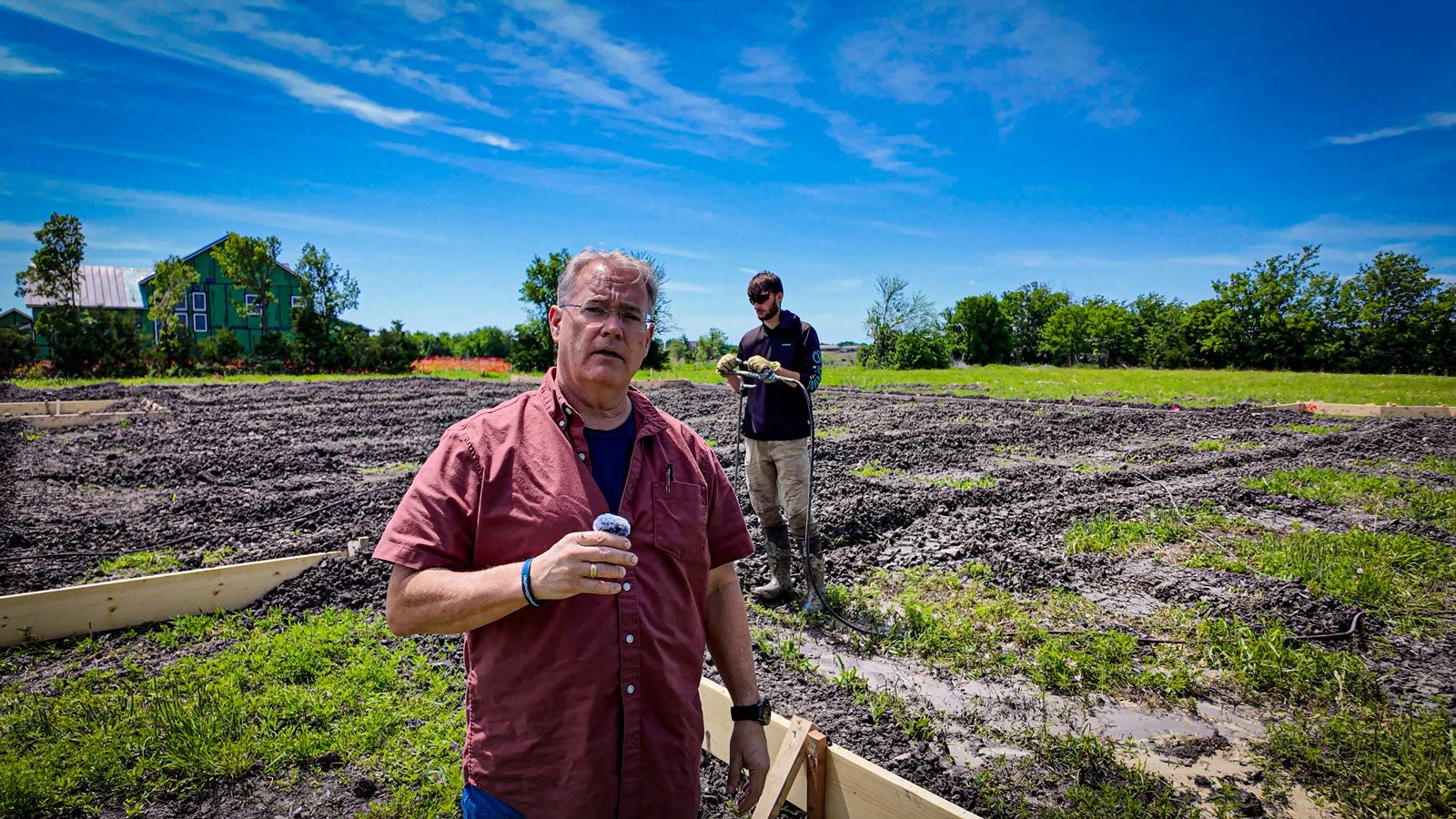
Expansive clay in DFW moves 1–3 inches every year.
That’s not a guess. That’s what happens when montmorillonite clay swells with moisture and shrinks when it dries. The cycle never stops.
On this residential construction site, the builder made a decision.
They’d already done soil treatment. Then they decided to relocate the foundation pad — 20 feet back, 20 feet to the side.
The original treatment covered the original location. But now there was a new footprint. And margins around it that needed coverage too.
So they called us.
Not to fix what didn’t work. To make sure the new location was completely stabilized before the concrete went down.
Why Coverage Matters When You Relocate
The original soil treatment did its job. But it covered the original pad location.
When the builder moved the foundation, they faced a choice: assume the adjacent area was treated, or verify complete coverage under the new footprint.
They chose verification.
Hand injection covers the entire new pad area plus a safety perimeter. No gaps. No assumptions.
Because in Texas, the cost of incomplete coverage — foundation movement, cracks, repairs — far exceeds the cost of doing it right the first time.
What Hand Injection Actually Does
When we arrived on-site, the plan was focused: cover what may have been missed in the relocation, plus the safety perimeter around the new pad.
Here’s what that looked like in the field:
Setup: Operators with a 10-foot injection wands, working systematically across the gap areas and perimeter.
Water pass: Saturate the soil first, ensuring full penetration at depth.
Chemical pass: Inject STX90 ionic solution, advancing the wand in controlled intervals to ensure complete coverage.
Verification: Hand injection allows precise placement. No gaps between treated and untreated areas. No pockets of uncertainty.
Watch What Hand Injection Coverage Looks Like
The Soil Problem Destroying DFW Homes: Residential Pad Stabilization with STX90
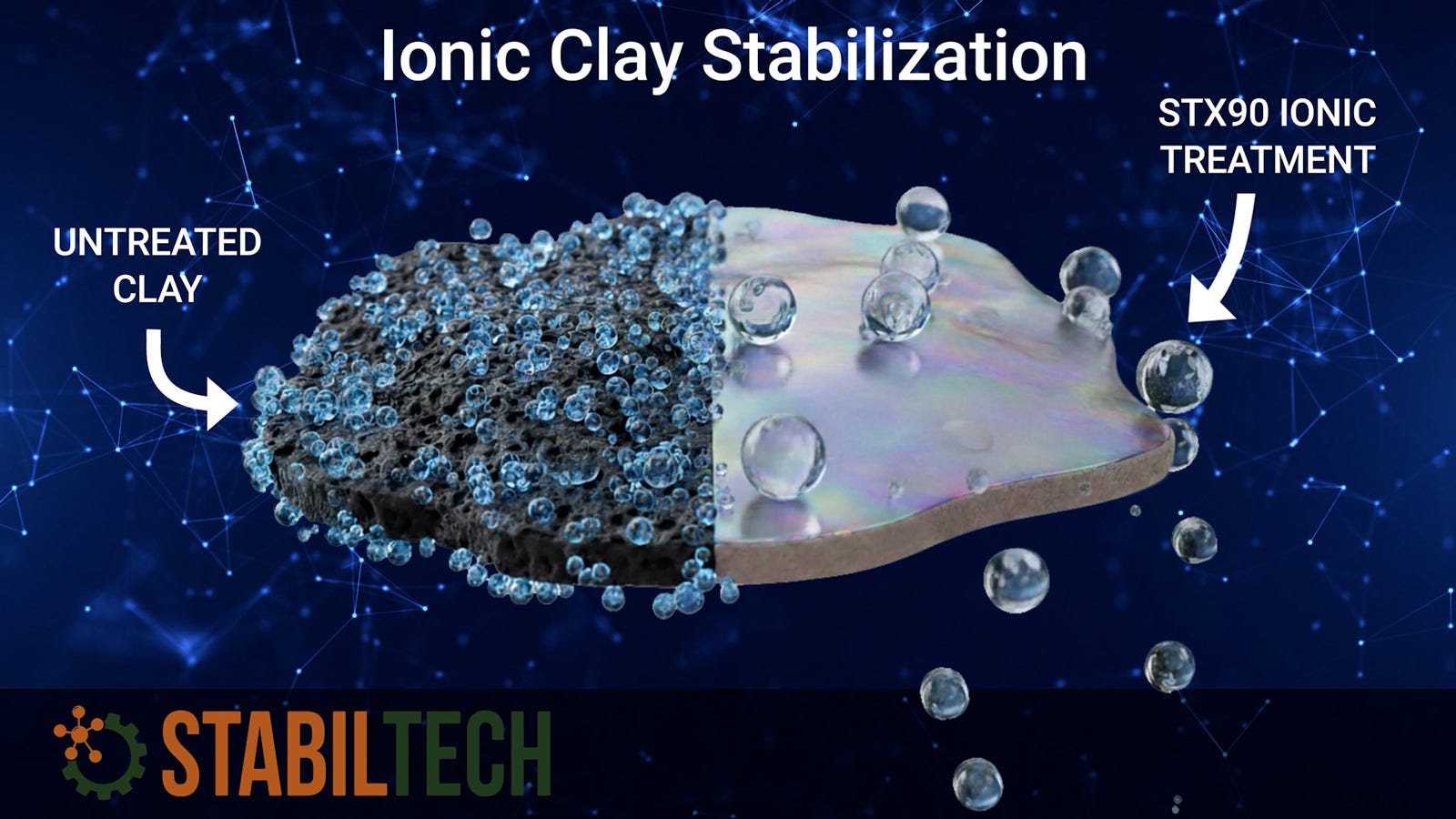
Why This Matters (The Mechanism)
At the molecular level, here’s what’s happening:
Untreated expansive clay carries a negative charge. Water molecules are attracted to that charge like a magnet. They stack around each clay particle, causing expansion.
When STX90 is injected properly, it changes that polarity.
The clay’s charge shifts. Water can’t form that thick adhesive layer anymore. Water passes through instead of bonding to the clay.
Result: No expansion. No shrinking. No movement.
Why Hand Injection Coverage Matters
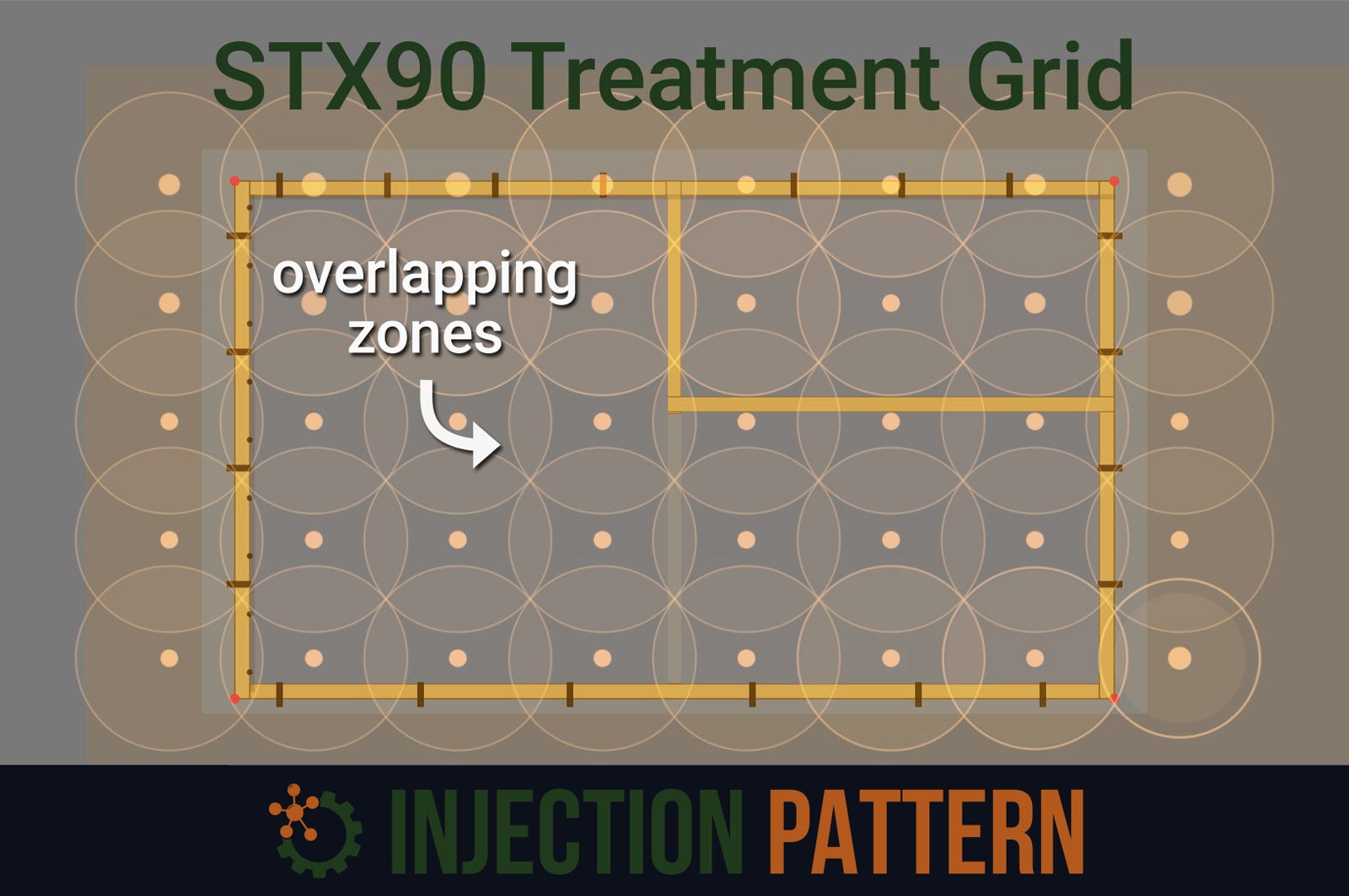
When the builder relocated the pad, the original tractor-based treatment covered the original location.
The new pad location? Different footprint. New perimeter. Areas that may have been missed.
A tractor can’t access those tight margins. A hand wand can.
So here’s what actually changed:
Strategic coverage of gap areas — not just assumptions
Verification of what was missed — not guessing
Hand injection reaches where machines can’t — precise, focused, complete
This builder made a decision: verify coverage instead of hoping it was good enough.
What Happens Next
The soil under the new pad location is now stabilized. No untreated pockets. No gaps.
The builder pours concrete on ground that won’t heave with the seasonal moisture cycles.
Years from now, the foundation will perform — stable and crack-free — while similar homes in the area deal with movement.
That’s the difference complete coverage makes.
The Takeaway
DFW expansive clay isn’t a foundation design problem. It’s a soil problem.
You can engineer around it with post-tension and reinforcement.
Or you can fix what’s causing the stress in the first place.
Only one of those options addresses the root issue.
Want to understand your soil before you build? Read the full technical breakdown on our blog.
Ready to stabilize your site?
I definitely enjoyed being on location, even getting my feet a little muddy.